




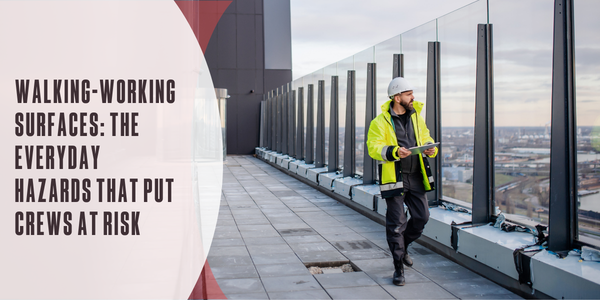
Walking-working surfaces: The everyday hazards that put crews at risk
By John Kenney, Cotney Consulting Group.
Across all industries, slips, trips and falls are a leading cause of injury. In outdoor construction and maintenance, the risk increases exponentially.
On any outdoor jobsite — whether you’re building a patio, running electrical lines, maintaining irrigation, installing tile or servicing a pool — workers spend most of their day on their feet. That means the condition of the surface they’re walking, standing, kneeling or climbing on is one of the most important — and most overlooked — safety factors on the job.
OSHA calls them walking-working surfaces, but most contractors know them by another name: the ground we work on. And in outdoor environments, the ground changes constantly. A surface that was stable an hour ago might be muddy now. A level walkway might turn into an obstacle course after materials are delivered or after another trade finishes their work.
If your crews aren’t actively assessing the surfaces beneath them, they’re working blind to one of the most significant injury drivers across the entire outdoor living industry.
The ground is always changing
Unlike indoor jobs, where surfaces stay consistent, outdoor contractors deal with shifting terrain every single day. Soil compacts. Sand washes out. Concrete cures unevenly. Rain softens the grade. Excavation work creates ruts. Heavy equipment leaves grooves and depressions. Add in cords, hoses, tools, scrap, edging, forms, packaging, vegetation and loose materials — and suddenly the walking surface becomes a complex hazard environment.
Across all industries, slips, trips and falls are a leading cause of injury. In outdoor construction and maintenance, where elevation changes, environmental conditions and multi-trade overlap occur constantly, the risk increases exponentially.
High-risk surfaces crews encounter daily
Almost every outdoor trade encounters these hazards:
- Uneven ground from excavation, compaction or erosion
- Loose gravel or stone around hardscape or landscape work
- Wet turf or muddy soil after rain or irrigation
- Slippery surfaces near pool equipment or water features
- Construction debris such as tile shards, paver offcuts, roots, branches or packaging
- Grade changes without warning markers
- Transitions between surfaces — grass to stone, stone to soil, soil to decking
- Temporary walk paths created by necessity, not design
Most of these hazards don’t look dangerous until someone trips, slips or twists a joint. And by then, the injury is already done.
The best crews reassess the ground constantly
Walking-working surface safety isn’t a one-time check. It’s a continuous habit.
The strongest crews:
- Assess ground conditions before starting work
- Reevaluate surfaces throughout the day
- Adjust paths as work progresses
- Mark hazardous areas immediately
- Communicate changes to other trades
Supervisors and foremen must reinforce these habits daily. When workers assume the surface is safe because it “was just fine earlier,” that’s when injuries occur.
Material staging impacts surface safety
How and where materials are staged can make — or ruin — a walking path. Poor staging leads to clutter, blocked routes and awkward detours. Good staging creates predictable, safe paths that crews can move through without constantly scanning for hazards.
Every trade benefits when staging is done thoughtfully:
- Hardscape prevents offcut debris from creating trip hazards.
- Lighting contractors protect cords and conduits from becoming obstacles.
- Landscapers keep tools and equipment clear of footpaths.
- Pool technicians avoid water pooling in work zones.
Staging isn’t just about production — it’s about protection.
Good housekeeping protects the feet, knees and back
Walking surface issues don’t just cause falls — they create musculoskeletal injuries. Uneven or unstable surfaces force workers to overcompensate with their footing, posture andbalance. Over a full shift, this takes a toll on the back, knees and ankles.
Avoiding these injuries requires:
- Frequent cleanup
- Leveling temporary walk paths
- Removing scrap and waste
- Keeping hoses and cords organized
- Addressing wet or slippery spots immediately
These actions don’t cost time — they save it by preventing lost days and rework.
Marking and barricading hazard zones
Not every hazard can be fixed immediately. Sometimes you must mark it instead.
Simple techniques go a long way:
- High-visibility marking paint
- Cones or stakes
- Caution tape
- Portable barricades
- Signage identifying soft ground or uneven footing
When multiple trades share space, communication and marking aren’t optional — they’re essential.
Walking-working surface safety is everyone’s job
Across all outdoor trades, from tile setters to pool technicians to landscapers and lighting installers, walking-working surface hazards remain one of the most common and preventable issues on the jobsite. When workers pay attention to the ground, when supervisors reinforce good habits, and when contractors treat housekeeping and staging as part of production — not an interruption — you instantly elevate both safety and efficiency.
Safe jobsites don’t start with tools, PPE or training manuals. They start with the surface every worker stands on. Respect the ground and you protect your people.
Learn more about Cotney Consulting Group in their Coffee Shop Directory or visit www.cotneyconsulting.com.
Recommended For You

When the heat takes over
Read More ...
Ladder safety: Getting the basics right across every trade
Read More ...
Housekeeping on the jobsite: The foundation of every safe work environment
Read More ...
UP TO THE MINUTE





Comments
Leave a Reply
Have an account? Login to leave a comment!
Sign In