






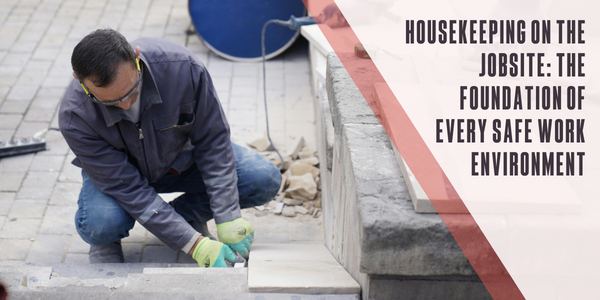
Housekeeping on the jobsite: The foundation of every safe work environment
By John Kenney, Cotney Consulting Group.
Safety, productivity and craftsmanship all begin with a well-kept work environment.
In every outdoor trade — whether you're laying pavers, installing lighting, building outdoor kitchens, maintaining sports surfaces, landscaping or servicing pool equipment — the quality of the jobsite starts with a straightforwardpractice: housekeeping. It’s the most basic safety principle, yet the first to slip when schedules tighten or crews get comfortable.
Clean, organized jobsites don’t happen by chance. They occur by culture. And the companies that treat housekeeping as non-negotiable see fewer injuries, fewer delays and far better production flow. Messy sites slow you down, damage materials, frustrate customers and create hazards that don’t need to exist. Clean sites eliminate guesswork.
The jobsite tells a story
Walk any jobsite for the first time, and you’ll know immediately whether the project is under control. When cords are tangled, materials are scattered, trenches are left open and tools are abandoned where they were last used, it’s a sign that processes — and safety — are being ignored.
On the other hand, a tidy jobsite shows respect: for the craft, the property, the customer and most importantly, the crew. Housekeeping isn’t cosmetic. It’s operational discipline.
Every trade benefits:
- Hardscape needs stable walk paths and organized staging.
- Landscaping crews rely on clear access routes for mowers and equipment.
- Lighting installers need uncluttered areas for ladders and trench work.
- Pool technicians need dry, slip-free working zones.
- Maintenance teams need safe walk-throughs in occupied facilities.
No matter the job, housekeeping reduces risks before they become incidents.
Most injuries come from simple hazards
It’s not the significant hazards that catch most workers off guard — it’s the small ones — a tool hidden in tall grass. A hose stretched across a walkway. A loose paver is left in a path. A wet patch near a pool system. A cord positioned right where a ladder needs to be set.
These hazards lead to:
- Trips and falls
- Twisted ankles
- Sprains and strains
- Material damage
- Delays in workflow
- Equipment downtime
A five-minute cleanup can prevent a month-long injury.
Make housekeeping continuous, not occasional
The biggest mistake supervisors make is treating housekeeping as something to do “at the end of the day.” By then, it’s too late. Hazards were present all day long.
Professional crews build housekeeping into the flow:
- After each material delivery
- After each task is completed
- Before moving to a new work area
- During downtime or crew transitions
- At each break or shift change
- As part of pre-task planning
A jobsite should evolve cleanly as work progresses — not turn into a cleanup project at 4:30 p.m.
Designate work zones and access paths
Well-defined zones eliminate half the clutter on a jobsite. Crews should know:
- Where materials are staged
- Where tools are stored
- Where waste is collected
- Which path does the equipment travel
- Where ladders and scaffolds will be set
- Which areas are blocked off for customer safety
Clear boundaries keep workers from improvising, and improvisation is where hazards multiply.
Control cords, hoses and tools
Across all outdoor trades, the most significant housekeeping hazards are the simplest:
- Extension cords
- Lighting cables
- Irrigation hoses
- Airlines
- Power tools left on the ground
- Open bags, buckets and containers
Crews should use cord bridges, hose ramps, overhead routing or temporary securing whenever possible. Tools go back to a designated location — not wherever workers finish the task.
The goal is predictable organization. Workers should always know where to find tools and where to avoid tripping hazards.
Waste management is more than cleanup
Scrap stone, tile shards, cut wire, broken pavers, packing straps, plastic wrap and vegetation debris all create hazards if not removed promptly. Leaving waste behind not only risks injury but also damages equipment tires, dulls bladesand slows production.
Good housekeeping includes:
- Dedicated waste collection areas
- Regular debris removal
- Covered bins for wind-prone sites
- Prevention of scattered materials in customer areas
Customers notice good waste management — it reflects the professionalism of the crew and the company.
Housekeeping defines your reputation
Safety, productivity and craftsmanship all begin with a well-kept work environment. When supervisors model strong housekeeping habits, crews follow. When expectations are clear and consistent, housekeeping becomes secondnature.
The most straightforward truth is this: Clean jobsites are safer jobsites. And safer jobsites produce better work. If you want fewer injuries, fewer disruptions and more professional results across your outdoor living projects, start with housekeeping. Every day. Every trade. Every job.
Learn more about Cotney Consulting Group in their Coffee Shop Directory or visit www.cotneyconsulting.com.
Recommended For You
The hidden strain
Read More ...
Walking-working surfaces: The everyday hazards that put crews at risk
Read More ...
Handle with care
Read More ...
UP TO THE MINUTE






Comments
Leave a Reply
Have an account? Login to leave a comment!
Sign In