



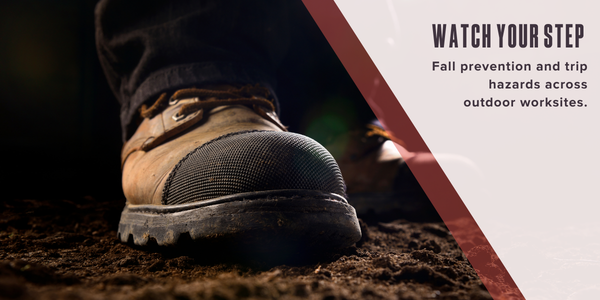
Watch your step
By John Kenney, Cotney Consulting Group.
Fall prevention and trip hazards across outdoor worksites.
Whether you're installing tile, setting pavers, running conduit for outdoor lighting, maintaining athletic turf or building a pergola, every trade shares the same silent threat: uneven, unpredictable walking surfaces. Most contractors think of fall hazards as working on roofs or ladders. But in outdoor living and exterior construction, the most common and most expensive fall injuries happen at ground level — right where crews walk all day.
What makes these incidents so dangerous is how ordinary they look. No one expects to fall while walking across a jobsite. Yet one misplaced step onto loose gravel, a hidden depression in the soil or a stray hose can put an experienced worker on the ground faster than any high-elevation risk. These aren't dramatic accidents. They’re the kind that pull a muscle, sprain an ankle, fracture a wrist or cause back injuries that linger for months.
And because every segment you support operates outdoors — often on uneven, shifting terrain — the risk is universal.
The jobsite changes every hour
One of the biggest challenges in outdoor living and exterior work is that the jobsite never stays the same. Landscapers dig trenches. Hardscape movers move pallets and compact soil. Lighting contractors lay conduit. Pool and spa crews run plumbing. Irrigation teams open and close water lines. Material deliveries create new obstacles. Weather changes the ground beneath your feet.
What was stable at 9 a.m. may be a hazard by noon.
Walk-and-work areas change constantly, and if crews don’t adapt, injuries follow. The best contractors develop a habit of reevaluating the site throughout the day, not just during the morning huddle.
Small obstacles, big consequences
Trip hazards in outdoor and mixed-trade projects often include:
- Uneven soil, ruts or slopes
- Pavers or tiles staged near footpaths
- Extension cords, hoses and string lines
- Rebar stakes, edging pins or scrap material
- Tools and equipment left mid-task
- Mud, loose gravel or wet leaves
- Unexpected grade changes
Individually, these hazards look insignificant. Combined, they form a minefield that slows production and puts workers at risk.
Too often, injuries occur while carrying materials, pulling a cart or simply walking, distracted by the task ahead. A worker doesn’t fall because the obstacle was huge — they fallbecause they didn’t see it coming.
Housekeeping comes first
Every jobsite has housekeeping rules, but not every jobsite enforces them. Outdoor contractors can’t afford to skip this step, especially with multiple trades working together. Good housekeeping isn’t about appearances — it’s a direct form of fall prevention.
Effective housekeeping practices include:
- Keeping walk paths free of tools and materials
- Maintaining designated staging areas
- Cleaning up debris continually, not just at the end of the shift
- Securing cords and hoses away from travel zones
- Filling, marking or blocking trenches and holes
- Using temporary lighting for early mornings and late afternoons
Walk a jobsite with a customer or inspector, and the first thing they notice is site organization. A clean site doesn’t just feel safe — it is secure.
Footwear and awareness matter on every surface
Outdoor crews work across surfaces that change throughout the day: wet grass, compacted gravel, synthetic turf, stone, clay, mulch, bare soil, decking and concrete. No single shoe will solve every problem, but worn-out soles, uncushioned knees and unstable platforms increase the risk of injury.
Promoting proper footwear, anti-slip soles and regular replacement schedules goes a long way. But the most important factor is awareness — crews need to be reminded regularly to watch their footing when moving materials, using wheelbarrows, working around trenches or transitioning between surfaces.
Production pressure creates blind spots
When crews feel rushed, their focus narrows. They stop scanning the ground and focus only on the next task. That’s when they miss the edge of a trench or misjudge a slight elevationchange.
Supervisors should emphasize that fast doesn’t mean safe — and safe doesn’t mean slow. The best crews find speed by working with intention, not by ignoring hazards. Reinforcing situational awareness during daily huddles makes it part of the culture.
A safer jobsite begins with a safe path
Fall prevention doesn’t require expensive equipment. It requires discipline — the discipline to clean as you go, to stage materials properly, to identify hazards early and to correct them before someone gets hurt.
In outdoor-living, landscaping, tile, lighting and athletic-surfacing environments, the ground is your work platform. Protecting that platform protects your people.
Every fall injury starts with a step. When crews take ownership of the ground beneath their feet — keeping it clear, stable and well-managed — they prevent accidents, improve efficiency and build safer, more professional jobsites across every segment of the outdoor industry.
Learn more about Cotney Consulting Group in their Coffee Shop Directory or visit www.cotneyconsulting.com.
Recommended For You
Ladder safety: Getting the basics right across every trade
Read More ...
Heat, hydration and fatigue
Read More ...
Housekeeping on the jobsite: The foundation of every safe work environment
Read More ...
UP TO THE MINUTE





Comments
Leave a Reply
Have an account? Login to leave a comment!
Sign In