UP TO THE MINUTE








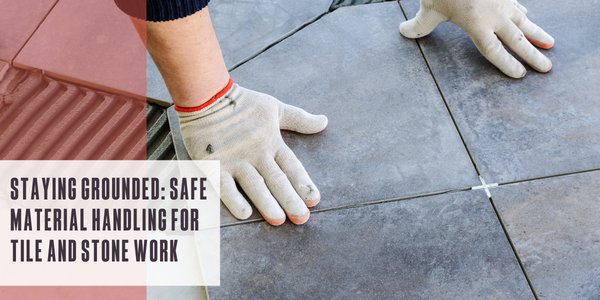
Staying grounded: Safe material handling for tile and stone work
By John Kenney, Cotney Consulting Group.
In tile and stone work, safety and craftsmanship are inseparable — and both begin with staying grounded.
Walk onto any tile or hardscape job, and you’ll see craftsmanship in motion — crews lifting heavy stone, moving pallets of pavers or setting large-format tiles with precision. But behind that artistry lies one of the most common job-site hazards in our trade: material handling injuries. Whether it’s a strained back from lifting awkward loads or a crushed toe from a dropped slab, improper handling techniques can end a good day’s work in seconds.
The hidden weight of the job
Tile and hardscape contractors often underestimate how physically demanding this work really is. A single stone paver can weigh 20–30 pounds, and crews may handle hundreds in a day. Add the repetitive bending, twisting and kneeling that come with installation, and you’ve got a recipe for fatigue and long-term injury risk.
In many cases, the problem isn’t the weight itself — it’s how it’s lifted. Workers who rush through setup or skip the extra step of staging materials correctly often end up overreaching, carrying too much or lifting from awkward angles. These shortcuts don’t save time; they cost productivity and sometimes careers.
Field reality: The wrong setup
Every tile or hardscape foreman has seen it: materials stacked too far from the work zone, heavy pallets left on uneven ground or crews manually hauling stone across soft soil because the forklift can’t access the site. These are preventable situations — but only if we plan material flow as carefully as we plan the layout pattern.
Before a job begins, supervisors should designate clear, level staging areas for tile, mortar and stone delivery. Use mechanical aids — dollies, lifts or even makeshift rollers — whenever possible. Keep pathways free of debris and wet materials that can cause slips or sudden shifts in footing.
Proper lifting technique isn’t optional
A strong back is not a substitute for safe technique. Train crews to:
- Bend at the knees, not the waist.
- Keep the load close to the body.
- Avoid twisting while lifting or setting.
- Work in pairs or use lifting straps for oversized materials.
Even minor adjustments — such as rotating tasks to reduce repetitive strain or scheduling short stretch breaks — help protect workers and maintain consistent energy throughout the day.
Using mechanical assistance
The industry has come a long way in developing ergonomic tools for setting tile and hardscape. Vacuum lifters, slab trolleys and powered carriers reduce strain dramatically when used correctly. Unfortunately, many crews still avoid them, citing time or convenience. The truth: using assistive equipment not only prevents injuries but also increases accuracy and production consistency. A fatigued installer makes mistakes that cost rework later.
Jobsite culture matters
Safety isn’t just about rules — it’s about culture. When foremen model correct lifting practices and enforce limits on manual handling, it shows that the company values its people as much as its product. Encourage every crew member to speak up if a load feels too heavy or the setup feels unsafe. There’s no pride in risking permanent injury for a few saved minutes.
The business case for safer handling
Reducing material handling injuries pays off in ways that go beyond safety records. Fewer injuries mean fewer callouts, lower workers’ compensation premiums, and stronger crew morale. A contractor known for protecting their team’s well-being gains loyalty, reputation and a stronger brand image — all of which lead to better retention and customer confidence.
The next time you’re on-site, take a look around. Are your materials staged in a way that makes sense? Are your crews using the tools that save their backs? If not, that’s where your next improvement starts. In tile and stone work, safety and craftsmanship are inseparable — and both begin with staying grounded.
Learn more about Cotney Consulting Group in their Coffee Shop Directory or visit www.cotneyconsulting.com.
Recommended For You
Ladder safety: Getting the basics right across every trade
Read More ...
Worn tires, real risks: Why contractors can't afford to ignore tire safety
Read More ...
Before you dig
Read More ...
UP TO THE MINUTE


Comments
Leave a Reply
Have an account? Login to leave a comment!
Sign In