





Handle with care
By Cotney Consulting Group.
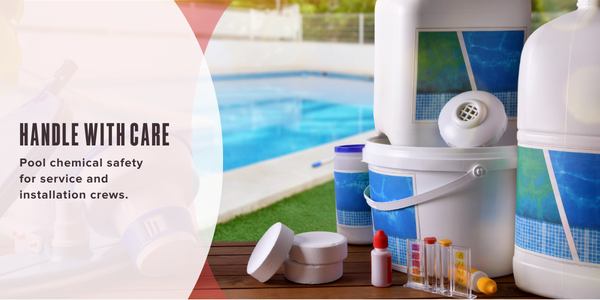
Pool chemical safety for service and installation crews.
Pool and spa contractors work with chemicals every day to keep water clean, balanced and safe. Because chlorine products, acids, sanitizers and oxidizers are so familiar, crews can begin treating them like ordinary supplies. That familiarity is where the danger starts.
Pool chemicals can cause severe burns, eye injuries, respiratory exposure, fires and violent reactions when they are stored, transported or mixed incorrectly. A damaged container, an unmarked bottle or a small amount of contamination can turn a routine service call into an emergency.
The risk is not limited to large commercial pools or equipment rooms. It exists in service vehicles, residential backyards, storage facilities and every location where chemicals are opened, measured or transferred.
Safe chemical handling begins with understanding that these products are never ordinary supplies. They require planning, separation and disciplined work practices from the moment they are loaded onto the truck until the job is complete.
Know the product before you handle it
Not all pool chemicals behave the same way. Products that look similar may react very differently when exposed to moisture, heat, organic material or other chemicals. Workers should review the product label and safety data sheet before using an unfamiliar material. The information should explain the hazards, the required personal protective equipment, the storage requirements and the emergency response procedures.
Contractors should also ensure employees understand the differences between product categories. Chlorine-based oxidizers should not be treated like acids. Liquid products should not be assumed to have the same handling requirements as dry materials. Different brands or formulations should never be combined unless the manufacturer specifically allows it. The label is not optional reading. It is part of the work instruction.
Never mix chemicals unless directed
One of the most serious hazards in pool service is accidental chemical mixing. Workers may pour a new product into a container that still contains residue from another chemical. A measuring cup may be used for more than one material. A wet scoop may be placed into a dry chemical container. Products may be stored close enough that a spill allows them to come into contact with one another. These simple mistakes can release toxic gases, create intense heat or start a fire.
Every chemical should have its own clean, dry measuring tools. Containers should never be reused for another product unless they were designed and approved for that purpose. Chemicals should be added to water only as directed by the manufacturer, and workers should never improvise mixing procedures. Unused chemicals should never be poured back into the original container because even a small amount of contamination can trigger a dangerous reaction.
When there is uncertainty, stop and verify. Chemical reactions are not forgiving.
Water can be a contaminant
Pool chemicals are used in water, but that does not mean they can be handled with wet tools or stored where moisture can reach them. Some dry chemicals react strongly when contaminated with water. A damp scoop, wet glove or leaking container can introduce enough moisture to create heat, gas or pressure inside the package.
Workers should keep chemical tools clean and dry. Containers should remain closed when not in use and should be protected from rain, irrigation and standing water. Crews should also avoid placing chemical containers directly on wet pool decks or in areas where splashing is likely. A few extra steps in setup can prevent a serious reaction.
Storage requires separation and ventilation
Chemical storage should be organized by compatibility, not by convenience. Acids, oxidizers and chlorine products should be separated according to the manufacturer's instructions and applicable storage requirements. Chemicals should not be stored near fuels, oils, fertilizers, solvents, rags or other materials that could react with them.
Storage areas should be cool, dry and adequately ventilated. Containers should remain upright, secured and protected from impact. Damaged, bulging or leaking packages should be isolated and handled in accordance with the product’s emergency procedures.
Contractors should also control access. Customers, children, untrained employees and other trades should not be able to enter chemical storage areas or handle products. A locked storage area protects both the workforce and the public.
Service vehicles need the same discipline
Many pool technicians carry several types of chemicals in their vehicles every day. That creates a moving storage environment exposed to heat, vibration, sudden stops and shifting loads. Chemical transport should follow the product label, safety data sheet and applicable transportation requirements. Containers should be secured, separated by compatibility and kept out of passenger compartments.
Drivers should inspect containers before loading and again after reaching the jobsite. Damaged or leaking containers should not be transported until they have been handled in accordance with the manufacturer’s instructions and company procedures.
A chemical leak inside a vehicle can create dangerous fumes, damage equipment and expose the driver before the problem is even visible. Technicians should know what to do if they smell a strong chemical odor or suspect a spill during transportation. Continuing to drive without assessing the situation can worsen the exposure.
Personal protective equipment must match the hazard
Chemical-resistant gloves, eye protection and protective clothing may be necessary depending on the product and task. Face protection may be required when pouring, mixing or opening containers that could splash. Ordinary work gloves may not resist the chemical being used. Safety glasses may not provide enough protection against splashes from the side or below. Workers should select protective equipment based on the product instructions rather than habit.
Respiratory protection may be required for certain products or conditions, but it should never replace proper ventilation, separation and handling controls. When respirators are required, the contractor must have the appropriate program, medical evaluations, fit testing and training in place. PPE is the last line of defense. The first line is preventing exposure.
Work in a controlled area
Chemical handling should take place in an area with good airflow and adequate room to work. The surface should be stable, and the technician should have a clear path away from the area if something goes wrong.
Other workers and customers should be kept away during measuring, transferring and application. Wind direction should be considered when opening dry chemicals or pouring liquids outdoors. Workers should also avoid leaning directly over containers. They should open lids carefully and allow any pressure or fumes to dissipate without placing their face over the opening. Good positioning reduces the chance that a splash, puff of dust or vapor release will strike the worker directly.
Spill response must be planned
A chemical spill is not the time to search for instructions. Crews should know who to contact, how to isolate the area and where the spill-response information is located. Spill kits should be selected for the chemicals being transported and used. A generic absorbent may not be appropriate for every product.
Workers should never wash an unknown chemical into a storm drain, landscape area or body of water. They should follow the safety data sheet, manufacturer guidance and applicable disposal requirements. Large spills, strong fumes, fires or uncontrolled reactions require emergency assistance. Employees should not attempt cleanup beyond their training or available protective equipment.
The priority is protecting people, not saving the material.
Emergency response can save a worker’s sight or health
Where corrosive chemicals are handled, suitable emergency flushing supplies should be immediately available and workers should know how to begin flushing without delay. Contaminated clothing should be removed carefully, and exposed skin should be rinsed as directed by the product’s first-aid instructions. Inhalation symptoms, breathing difficulty, severe burns or eye exposures require prompt medical attention.
Employees should report every exposure, even when symptoms appear minor. Chemical injuries can worsen after the initial contact, and early treatment matters. Emergency phone numbers, site directions and product information should be accessible to the crew.
Training must go beyond reading the label
Chemical safety training should reflect the work technicians actually perform. Employees should practice safe container opening, measuring, storage and transport. They should understand compatibility, recognize damaged packaging and know how to respond to spills or exposures.
Supervisors should reinforce these expectations through jobsite observations and short safety discussions. When unsafe shortcuts are corrected immediately, they are less likely to become accepted habits. Refresher training should include experienced technicians as well as new employees. Familiarity can lead to shortcuts, and shortcuts are often where chemical incidents begin.
Safe chemical handling protects more than the crew
A chemical incident can injure workers, expose customers, damage property, contaminate a site and shut down operations. It can also damage the reputation of a contractor who has spent years building customer trust.
Pool chemicals are essential to the work, but they must be treated with respect at every stage. Know the product. Keep incompatible materials separated. Use clean, dry tools—secure containers during transport. Wear the right protection and prepare for emergencies before they happen.
Professional pool and spa service is measured by more than water quality. It is also measured by how safely crews store, transport and handle the products that make that water safe.
Learn more about Cotney Consulting Group in their Coffee Shop Directory or visit www.cotneyconsulting.com.
Recommended For You

Dust isn’t just dirt: Controlling silica exposure in the field
Read More ...
DOL urges plan to protect outdoor workers from poor air quality
Read More ...
Housekeeping on the jobsite: The foundation of every safe work environment
Read More ...
UP TO THE MINUTE






Comments
Leave a Reply
Have an account? Login to leave a comment!
Sign In