




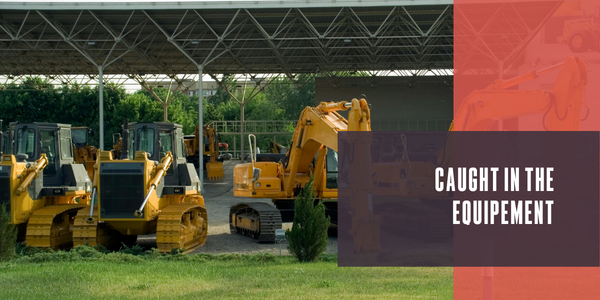
Caught in the equipment
By Cotney Consulting Group.
Preventing entanglement and pinch-point injuries.
Outdoor contractors rely on machinery to move material, improve production and complete demanding work. But that same equipment creates severe entanglement, pinch-point and caught-between hazards. These incidents happen quickly and often result in crushing injuries, amputations or fatalities.
Landscaping crews use mowers, chippers, aerators and trenchers. Hardscape contractors operate compactors, mixers and skid steers. Sports-surface crews work with rollers, spreaders and specialized installation equipment. Pool, maintenance and outdoor living contractors use pumps, saws, lifts and powered attachments.
The equipment may vary, but the hazard is the same. A glove catches in a rotating shaft. A hand is placed between a moving attachment and a fixed surface. Clothing is pulled into equipment. A worker reaches into a machine before all stored energy has been released.
Preventing these injuries requires more than telling workers to be careful. It requires guarding, proper shutdown procedures, disciplined work practices and a clear understanding of how equipment can move.
Familiar equipment can create false confidence
The more familiar workers become with equipment, the easier it is to replace procedure with habit. A crew member who has operated the same mower, trencher or compactor for years may begin skipping steps. A guard is removed because it slows the cleaning process. A worker reaches toward a jammed component while the machine is still running. Someone assumes an attachment cannot move because the engine has been shut off.
Experience is valuable, but it does not eliminate risk. Powered equipment should receive the same level of attention every time it is used. The machine does not become less hazardous because the operator knows it well.
Understand where pinch points exist
A pinch point is any location where a body part can be caught between moving components or between a moving part and a stationary object. Common pinch points include hinges, pivots, belts, pulleys, chains, rollers, hydraulic attachments, compacting plates, rotating shafts, augers, lift arms and tailgates. Mobile equipment also creates pinch points when it operates close to walls, vehicles, stored material or other machinery.
Some hazards are obvious. Others appear only when a machine changes position, an attachment shifts or stored pressure is released. Workers should identify these areas before operating, adjusting or cleaning equipment. Warning labels and guards should remain visible and intact. When the equipment’s movement is unclear, workers should stop and review the manufacturer’s instructions before proceeding.
Keep guards and safety devices in place
Machine guards are installed to separate workers from moving parts. They should never be removed, bypassed or altered simply because they make access less convenient. A missing guard can expose belts, chains, blades, gears and other components that can pull in clothing, gloves or body parts before the worker has time to react.
Safety interlocks, emergency stops and operator-presence controls must also be tested and maintained. A device that does not function correctly is not a minor maintenance issue. Equipment with missing or defeated guards should be removed from service immediately. Crews should never tape down a switch, disable an alarm or defeat a safety feature to keep production moving. The guard is part of the machine, not an optional accessory.
Loose clothing and jewelry increase the risk
Rotating equipment can catch anything that hangs, drapes or extends into the operating area. Loose sleeves, drawstrings, long hair, jewelry and poorly fitted gloves can become entangled in shafts, belts, blades or feed systems. Once material is caught, the equipment may pull the worker in before the machine can be stopped.
Workers should secure loose clothing and long hair before beginning the task. Jewelry should be removed when it could come into contact with moving equipment. Gloves should fit properly and should not be worn around rotating machinery that creates an entanglement hazard. Personal protective equipment must match the task. A glove that protects against cuts may create greater danger if it can be pulled into a moving component.
Never clear a jam while equipment is energized
One of the most common causes of caught-in injuries is attempting to clear material from operating or partially shut-down equipment. Grass, roots, soil, wire, plastic and debris can jam mowers, chippers, augers, mixers and compactors. Workers may believe they can remove the obstruction quickly without completing a full shutdown.
That shortcut can have serious consequences. Before clearing, adjusting, cleaning or servicing equipment, workers must follow the manufacturer’s shutdown procedure and the company’s energy-control requirements. Depending on the machine, this may include disconnecting electrical power, removing the battery, shutting off the fuel, applying lockout/tagout procedures and relieving pressure or blocking moving parts.
Workers must also allow rotating components to stop completely. A blade, shaft or flywheel may continue moving after the power has been turned off. A machine that appears stopped may still contain enough energy to cause severe injury.
Stored energy must be controlled
Equipment can move even when the engine is off, or electrical power has been disconnected. Hydraulic pressure, compressed springs, raised attachments, gravity and rotating components can all store energy. A lifted bucket can drop. A compressed part can release. A hydraulic line can move an attachment unexpectedly.
Before workers place any part of their body beneath or between equipment components, the system must be secured. Lower attachments to the ground whenever possible before servicing or leaving equipment unattended. Raised equipment should be supported with approved blocking or manufacturer-provided safety devices. Hydraulic pressure should be relieved according to the operating instructions, and tires or moving components may need to be chocked.
Never rely solely on a hydraulic system, jack or control lever to hold equipment in place.
Maintain distance from moving equipment
Caught-between injuries also occur when workers on foot operate too close to mobile equipment. A worker can be pinned between a skid steer and a wall, between a trailer and a vehicle or between moving equipment and stored material. Tight outdoor job sites, backyards and occupied properties make these conditions even more likely.
Equipment routes and restricted zones should be established before movement begins. Workers should remain outside the swing radius and travel path unless the operator knows exactly where they are. Workers should never enter an operator’s blind spot or assume that alarms, mirrors or cameras guarantee they have been seen.
Eye contact and communication are essential. No worker should approach mobile equipment until the operator has acknowledged them and, when necessary, stopped movement. Spotters should stand where the operator can see them and should never position themselves between moving equipment and a fixed object.
Inspect equipment before each shift
Many caught-in and pinch-point incidents are connected to damaged or poorly maintained equipment. Before use, workers should inspect guards, controls, emergency stops, hydraulic lines, belts, attachments and locking mechanisms. Loose components, damaged covers or leaking systems should be reported immediately.
Equipment should also be inspected after transport, attachment changes or repairs. A guard may have shifted. A locking pin may not be seated. A hydraulic connection may be loose. The operator should not assume someone else completed the inspection. Damaged equipment should be removed from service until it has been properly repaired and verified safe.
Keep hands out of the operating zone
Workers often place their hands near moving equipment to guide materials, make adjustments or check alignment. That practice should be avoided whenever a tool, fixture or alternate method can keep the worker outside the hazard zone.
Push sticks, hooks, clamps and positioning tools can help workers control material without placing their hands near blades, rollers or feed mechanisms. Materials should be supported so they do not shift unexpectedly.
Workers should never reach across an operating machine or place their hands where they cannot see them. If a task requires a hand to enter the operating zone, the equipment must first be fully shut down and secured.
Communication matters during team operations
Some equipment tasks require more than one person. One worker may operate the machine while another loads material, watches clearance or guides movement. These activities require a clear plan.
The operator and assisting workers should agree on signals before starting. Everyone should understand who has authority to stop the equipment and how that stop will be communicated. The operator should never start or move equipment until all workers are accounted for and clear of the hazard area.
Noise, distance and poor visibility can make verbal communication unreliable. Hand signals, radios or a dedicated spotter may be necessary depending on the task. When communication breaks down, the equipment should stop.
Training must be specific to the machine
General equipment experience does not automatically qualify a worker to operate every machine. Controls, attachments, safety devices and shutdown procedures vary. A worker familiar with one skid steer, trencher or chipper may not understand another model.
Training should cover safe startup and shutdown, guarding, pinch points, attachment changes, jam-clearing procedures, stored-energy controls and emergency response. Manufacturer instructions should be available, and workers should be trained before operating unfamiliar equipment.
Supervisors should also observe workers in the field. A person may complete an orientation successfully and still develop unsafe habits over time.
Emergency response must protect the rescuer
When someone becomes caught in equipment, the instinct is to rush in and pull them free. That reaction can expose additional workers to the same hazard. The priority is to stop and isolate the equipment. Emergency services should be contacted immediately for serious crushing, entanglement or amputation injuries.
Workers should not reverse, restart or move equipment unless directed by trained emergency personnel or necessary to prevent immediate further harm. Moving machinery without understanding how the worker is trapped can worsen the injury. Crews should know where emergency shutoffs are located and who is responsible for making the call. The rescue plan should never create a second victim.
Equipment safety protects the worker and the business
Outdoor contractors depend on machinery to remain productive and competitive. But equipment only improves the business when it is operated and maintained safely. Caught-in and pinch-point injuries are preventable when guards remain in place, stored energy is controlled, workers stay clear of moving parts and crews refuse to clear jams or make adjustments while equipment is energized.
The most important rule is also the simplest: Never place any part of the body where equipment can move, close, rotate or release energy unexpectedly.
Machinery can replace physical effort, but it can never replace judgment. Contractors who maintain guards, control stored energy, keep workers clear of operating zones and enforce proper shutdown procedures protecttheir crews and prevent injuries that can change a worker’s life in seconds.
Learn more about Cotney Consulting Group in their Coffee Shop Directory or visit www.cotneyconsulting.com.
Recommended For You

Fall hazards in everyday repairs
Read More ...
Staying grounded: Safe material handling for tile and stone work
Read More ...
Hazard awareness: Building a worker’s ability to see problems before they happen
Read More ...
UP TO THE MINUTE




Comments
Leave a Reply
Have an account? Login to leave a comment!
Sign In