





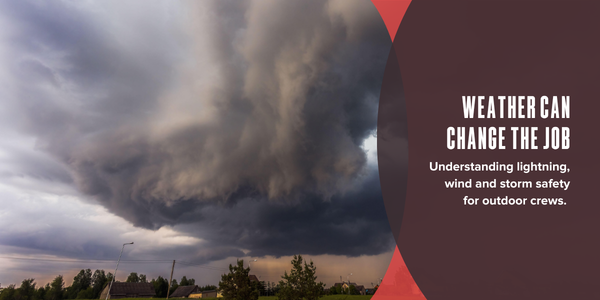
Weather can change the job
By Cotney Consulting Group.
Understanding lightning, wind and storm safety for outdoor crews.
Outdoor contractors plan around schedules, crews, equipment and deliveries, but weather can change every one of those plans in minutes. Lightning, wind and sudden storms are not inconveniences. They are changing jobsite conditions that must be monitored and managed like any other hazard.
Landscaping crews may begin the day under clear skies and face lightning by afternoon. Hardscape crews may be handling large materials when the wind increases. Pool and spa contractors may be working around open water as a storm approaches. Lighting installers may be on ladders, and sports-surface crews may be applying coatings that cannot tolerate sudden rain.
The mistake is waiting until the storm is directly overhead before reacting. By then, workers may already be exposed, equipment may be unsecured and the safest route off the site may be limited. Professional contractors build weather awareness into the workday from the start.
The forecast is only the beginning
Checking the forecast before the shift is important, but it is not enough. Outdoor conditions can vary significantly within a short distance. A forecast may call for scattered storms, but one cell can develop quickly over the jobsite. Wind may increase ahead of visible rain, and thunder may be heard before dark clouds appear directly overhead.
Supervisors should monitor conditions throughout the day using reliable weather information and direct observation. The contractor should assign one person with clear authority to monitor conditions, stop work and approve the return to the site. Weather decisions should not be left to individual workers making separate judgments. The site needs one clear plan and one clear point of authority.
Lightning requires early action
Lightning is one of the most serious weather hazards outdoor crews face because it can strike well beyond the center of a storm. Workers do not need to be holding metal to be at risk. Open fields, athletic facilities, pools, isolated trees, ladders, lighting systems and exposed work areas can all increase vulnerability.
When thunder is heard, outdoor work should stop, and workers should move to a substantial enclosed building or fully enclosed vehicle. Pergolas, open sheds, tents, treesand covered patios do not provide reliable lightning protection. Crews should not wait for the first visible strike before leaving the work area. The safest decision is to make an early decision.
Plan the shelter before work begins
Every outdoor job should have a designated severe-weather shelter. Workers need to know where to go, how long it will take to reach that location, and how they will be accounted for once there. On large properties, parks, athletic fields or remote sites, the nearest safe structure may be far away.
Vehicles may provide protection when used correctly, but they must be accessible and capable of holding the crew. A vehicle parked across the property or blocked by equipment may not be a realistic part of the emergency plan.
The weather plan should also account for subcontractors, delivery drivers and temporary workers. Everyone on the site must receive the same direction. A shelter plan that exists only in the supervisor’s head is not a plan the crew can follow.
Wind changes more than comfort
Wind can turn ordinary materials and equipment into serious hazards. Large panels, landscape fabric, lumber, fencing, canopies and packaging can become airborne. Tree branches may move unexpectedly. Ladders and elevated work platforms can become unstable. Dust and chemical spray can travel into occupied areas or neighboring properties.
The effect of wind is often greater on large, light or awkward materials than workers expect. A component that is easy to control on the ground can become difficult to manage when lifted or carried. Crews should stop handling materials when wind makes control uncertain. Spraying, coating and chemical application should also stop when wind prevents the material from being controlled, or causes drift toward workers, customers or neighboring property.
Materials should be secured before conditions worsen, not after they begin moving. Contractors should inspect temporary structures, tarps, signs, fencing and stored materials. Anything that can shift, roll or blow should be restrained or moved to a safer location.
Ladders and elevated work need additional caution
Outdoor lighting, maintenance and outdoor living projects often require ladders, lifts or elevated work. Wind can affect the worker’s balance, move tools or materials, and place unexpected force on access equipment. Rain can make rungs, platforms and walking surfaces slippery.
Work at elevation should be reassessed as weather conditions change. If the worker cannot maintain stable footing or control materials, the task should stop. Ladders should be lowered and secured before storms arrive. Tools and loose materials should not remain on elevated surfaces where they can fall or blow away. A schedule delay is easier to manage than a fall.
Rain changes the ground beneath the crew
Rain creates more than wet clothing. Soil can soften. Trenches can fill. Slopes can become unstable. Pavers, decking, concrete and pool surrounds can become slippery. Equipment can lose traction, and vehicle routes can become unsafe.
The condition of the site should be reevaluated after rain, even if the storm was brief. Areas that appeared firm earlier may no longer support workers, ladders or equipment.Excavations and trenches should be re-inspected by the designated competent person after rain or any event that could affect soil stability.
Standing water can hide holes, uneven surfaces, sharp debris and electrical hazards. Workers should never assume they know what is beneath the water because they walked through the area before the storm. Pumps, temporary cords and electrical equipment should also be inspected before use resumes. Weather can change the jobsite even after the rain has stopped.
Stormwater can create environmental problems
Outdoor contractors must also think about where the water goes. Rain can carry soil, chemicals, coatings, fuel residue and loose material into storm drains, neighboring properties, and waterways. A site that was organized in dry conditions may create runoff problems during a storm.
Materials should be stored and covered so they do not wash away. Soil piles, chemicals and waste should be kept away from drainage paths. Erosion and sediment controls should be installed and maintained where required. Crews should inspect drains, silt barriers and protected areas before anticipated rain. Waiting until runoff is already moving through the site may be too late to control it. Storm preparation protects the environment, the property and the contractor’s reputation.
Equipment must be secured before the storm
Mobile equipment, tools and materials should be protected before severe conditions arrive:
- Attachments should be lowered.
- Equipment should be parked on stable ground and away from low areas where flooding may occur.
- Fuel and chemical containers should be closed and secured.
- Battery-powered and electrical tools should be removed from wet areas.
- Chargers, extension cords and temporary connections should be protected or disconnected.
- Trailers, gates and storage compartments should be closed and latched.
- Loose debris should be collected before wind spreads it across the property.
A rushed shutdown during a storm increases the chance that something will be missed. Early preparation allows the crew to leave the site in an orderly way.
Heat and storms can occur on the same day
Summer storm conditions often develop during periods of extreme heat. A crew may already be fatigued or dehydrated when a storm approaches. That can slow decision-making and make it harder to secure the site quickly. Supervisors should avoid waiting until workers are exhausted before preparing for weather. The crew needs enough time and energy to shut down equipment, secure materials and reach shelter safely. Heat, lightning, wind and rain should not be treated as separate problems when they are part of the same weather pattern.
Communication must be clear
Weather emergencies require simple instructions. The crew should know who monitors conditions, who orders the shutdown, where everyone will shelter, how workers will be accounted for and who authorizes the return to work.
Workers should not return to the site simply because the rain slows or the sky appears brighter. Crews should remain sheltered until the designated weather monitor confirms that the storm has passed and the required company waiting period has been met. Language differences should also be considered. Instructions must be understood by every worker, not just announced once. A confused shutdown is not a safe shutdown.
Returning to work requires a new assessment
After a storm, contractors should treat the site as a changed workplace. The supervisor should inspect walking surfaces, excavations, temporary power, ladders, materialsand equipment before crews resume work. Tree limbs, fences and overhead hazards should also be checked. Electrical equipment, temporary power and connections exposed to water or storm damage should remain de-energized until inspected and determined safe by a qualified person.
Damaged equipment should remain out of service. The work plan may also need to change and some tasks may no longer be safe or practical that day. Returning too quickly can expose the crew to hazards left by the storm.
Weather safety protects the schedule
Contractors sometimes hesitate to stop work because they are concerned about production. But severe weather can create consequences far greater than a short delay. A lightning incident, fall, equipment loss, chemical release or damaged installation can shut down the project completely.
Good weather planning allows contractors to protect completed work, secure materials and restart work more efficiently once conditions improve. The goal is not to avoid every inconvenience. The goal is to prevent a changing forecast from becoming an emergency.
Outdoor contractors cannot control the weather, but they can control how early they respond. Contractors who monitor conditions, assign clear authority, secure the siteand reassess hazards before work resumes protect their crews, their equipment and the schedules their businesses depend on.
Learn more about Cotney Consulting Group in their Coffee Shop Directory or visit www.cotneyconsulting.com.
Recommended For You
Stay ahead of hail with predictive weather intelligence
Read More ...
The next-generation weather technology everyone is using
Read More ...
Why hail prediction gives contractors a business advantage
Read More ...
UP TO THE MINUTE






Comments
Leave a Reply
Have an account? Login to leave a comment!
Sign In