




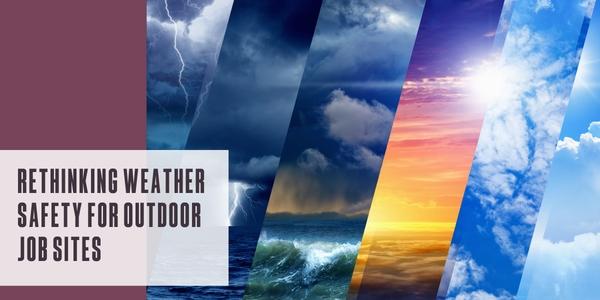
Rethinking weather safety for outdoor jobsites
By Jesse Sanchez.
Learn how new weather intelligence tools are helping contractors better assess heat and lightning risks before conditions become dangerous.
Weather can shift quickly on an outdoor jobsite, forcing contractors to make immediate decisions that affect both worker safety and project schedules. When crews are exposed to lightning, extreme heat or sudden storms, the challenge is not simply responding once conditions worsen; it is knowing how to act before those hazards put people at risk. On this episode of From the Ground Up™, host Karol Weyman spoke with Jameson Allen of Flash Weather AI about why more companies are rethinking weather safety through a more proactive lens.
Jameson said the most significant weather-related risks vary by industry, but lightning and heat consistently stand out as two of the most serious concerns. Lightning may be less frequent than other jobsite hazards, he explained, but its consequences can be immediate and severe. Heat, meanwhile, presents a different kind of danger, one that can build gradually and affect worker performance, decision-making and overall site safety before crews fully recognize the problem. He shared, “The main ones are going to be, number one, lightning. And not because it happens the most often, necessarily, but because it is the most devastating when it does occur. But close behind that is heat risk, heat illness.”
That distinction becomes especially important when companies consider how heat is measured. Jameson explained that many organizations still rely on the heat index, which accounts for temperature and humidity. However, he said wet bulb globe temperature offers a more precise picture because it considers additional variables such as wind, solar radiation and other environmental factors that influence how the body experiences heat. “Number one, you get the temperature. And then you add to that the wind factor because that's going to have a cooling effect. And if there's no wind, obviously your wet bulb globe temperature goes up. And there are things like humidity in there.” Jameson said.
Lightning safety presents a similar issue. Many organizations still follow the “30-30 rule,” which relies on seeing lightning or hearing thunder before work is delayed and then requires a 30-minute wait before activity resumes. Jameson said that approach leaves crews making reactionary decisions based on what they can see or hear rather than using predictive data to guide safety planning.
For contractors, that difference matters. More precise weather intelligence can help crews clear sites earlier, schedule work more effectively and reduce unnecessary delays while improving safety outcomes.
Listen to the podcast or Watch the webinar to learn more about weather safety for outdoor jobsites!
Learn more about Flash Weather AI in their Coffee Shop Directory or on flashweather.ai.
About the author

Jesse is a writer for The Coffee Shops. When he is not writing and learning about the roofing industry, he can be found powerlifting, playing saxophone or reading a good book.
Recommended For You

Green homes and real returns
Read More ...
Fast set up and strong support
Read More ...
From soil to sprinklers and everything in between
Read More ...
UP TO THE MINUTE




Comments
Leave a Reply
Have an account? Login to leave a comment!
Sign In