




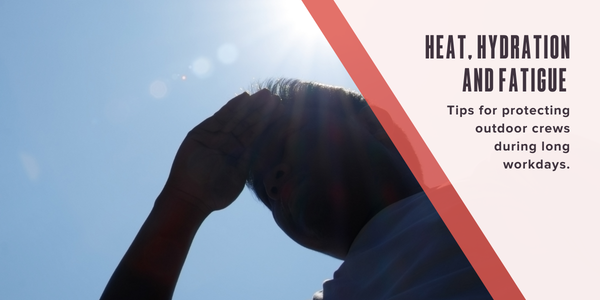
Heat, hydration and fatigue
By Cotney Consulting Group.
Tips for protecting outdoor crews during long workdays.
Outdoor work has always demanded toughness, but toughness should never be confused with ignoring the warning signs of heat stress. Landscaping crews, hardscape installers, pool and spa technicians, sports-surface contractors, lighting installers and maintenance teams often spend long days working in direct sunlight, on reflective surfaces and around equipment that adds even more heat to the environment.
The problem is that heat-related injuries rarely begin with a dramatic collapse. They usually start much earlier, with small warning signs that are easy to dismiss. A worker becomes unusually quiet. Someone slows down, makes a simple mistake or complains of a headache. Another worker stops sweating, becomes dizzy or seems confused.Those are not signs of weakness. They are signs that the body may be struggling to control its temperature.
Contractors who treat heat as just part of the job place their crews, productivity and businesses at unnecessary risk. Heat illness is preventable, but prevention requires planning, supervision and a culture that allows workers to speak up before a manageable condition becomes an emergency.
Heat exposure builds throughout the day
Outdoor contractors deal with more than just the temperature shown on a weather app. Humidity, direct sunlight, limited airflow, heavy clothing and physical exertion all increase the strain on the body.
A crew installing pavers may be working over a surface that absorbs and reflects heat. A pool technician may be kneeling on a hot deck while working around equipment. A landscaper may be operating machinery that produces additional heat while wearing protective clothing. An outdoor lighting installer may be trenching or pulling cable in an area with little shade. These conditions can push the body past its limits even when the air temperature does not appear extreme.
Heat exposure is also cumulative. A worker may feel fine in the morning but become impaired later in the day as dehydration and fatigue build up. That is why contractors cannot rely on a single morning reminder. Heat safety has to be managed throughout the shift.
Hydration must start before the worker feels thirsty
Thirst is not always an early warning sign. By the time a worker feels strongly thirsty, dehydration may already be affecting concentration, coordination and judgment. Crews should have convenient access to cool drinking water throughout the day. Water should be located close enough that workers do not have to walk across the property or wait for a break to get it. Supervisors should encourage steady drinking rather than waiting until someone feels overheated. Small amounts taken frequently are generally more effective than drinking a large amount all at once.
During extended periods of heavy sweating, contractors may also consider appropriate electrolyte replacement as part of the hydration plan. Water should remain readily available, and highly caffeinated or sugary drinks should not be treated as substitutes for proper hydration.
Hydration is not a personal preference on a hot jobsite. It is part of the work plan.
Acclimatization protects new and returning workers
One of the highest-risk situations occurs when a new worker, temporary employee or returning crew member is immediately placed into a full outdoor workload. The body needs time to adjust to heat. A worker returning after vacation, illness or time away from outdoor duties may not have the same tolerance they had earlier in the season.
Contractors should gradually increase the physical workload and heat exposure of new or returning workers. Supervisors should monitor them closely during the first several days and pair them with experienced crew members who recognize the warning signs of heat illness.
Experience in the trade does not automatically mean the body is prepared for the conditions. Heat tolerance must be developed gradually and may need to be rebuilt after time away from strenuous outdoor work.
Fatigue changes the way people work
Heat and fatigue often work together. As the body struggles to cool itself, concentration drops and reaction time slows. That creates secondary hazards. A fatigued worker may misjudge a step, mishandle a tool, forget a safety procedure or walk into the path of moving equipment. The incident may be recorded as a trip, cut or equipment injury, but heat and fatigue may have contributed to the mistake.
Supervisors should watch for changes in behavior, not only physical symptoms. Irritability, confusion, unusual silence, poor coordination and repeated mistakes can all indicate that a worker needs to stop, cool down and be evaluated. Pushing through fatigue does not demonstrate commitment. It increases the chance that someone will get hurt.
Rest and shade are part of production
Some contractors worry that additional breaks will reduce production. In reality, planned recovery periods can help crews maintain a steadier pace and avoid the largerdisruptions caused by illness or injury. Breaks should be scheduled according to the conditions and the physical demands of the work. Workers performing heavy labor in direct sunlight may need more frequent recovery time than those performing lighter tasks in shaded areas. Shade can come from a tent, a canopy, an air-conditioned vehicle or another suitable cooling area. The important point is that the worker has a place to recover away from direct heat.
Whenever possible, the most physically demanding work should be scheduled earlier in the day. Crews can then move to lighter tasks, shaded areas or less strenuous work as conditions worsen. Good scheduling is one of the most effective heat-control measures available.
Crews must know the warning signs
Heat exhaustion may involve heavy sweating, weakness, headache, nausea, dizziness, rapid pulse and muscle cramps. Workers experiencing these symptoms should be moved to a cooler area, given appropriate fluids and monitored closely. Crews should also use a buddy system during high-heat conditions because an affected worker may not recognize how quickly their condition is worsening.
Heat stroke is a medical emergency. Call emergency services immediately, move the worker to a cooler location and begin active cooling while help is on the way. Do not leave the worker alone. Every worker should know who will call for help, how responders will reach the site and who is responsible for assisting the affected employee until help arrives. A written emergency plan is valuable, but it only works when the crew understands it.
Leadership sets the standard
Workers take their cues from supervisors. If the foreman ignores the heat, skips breaks and treats hydration as optional, the crew will usually do the same. Strong leaders talk about the conditions, adjust the schedule and watch their people. They make it clear that reporting symptoms is responsible behavior, not complaining. They also understand that each worker reacts to heat differently based on physical condition, medications, clothing, workload and acclimatization.
Heat safety cannot be based on the toughest person on the crew. It has to protect everyone. Outdoor contractors cannot control the weather, but they can control how they prepare, schedule and supervise the work. Water, shade, rest, acclimatization and active monitoring are not obstacles to production. They are the systems that allow production to continue safely.
A properly managed crew will work more consistently, make fewer mistakes and have a far better chance of returning home healthy at the end of every shift.
Learn more about Cotney Consulting Group in their Coffee Shop Directory or visit www.cotneyconsulting.com.
Recommended For You
Ladder safety: Getting the basics right across every trade
Read More ...
Walking-working surfaces: The everyday hazards that put crews at risk
Read More ...
Dust isn’t just dirt: Controlling silica exposure in the field
Read More ...
UP TO THE MINUTE






Comments
Leave a Reply
Have an account? Login to leave a comment!
Sign In