





Don’t wait for the first strike
By The Coffee Shops™.
Learn how leveraging predictive weather intelligence can help organizations make more informed decisions before severe weather develops.
In many fields, whether you’re a roofer waiting for a clear day to get a job finished or a golf course manager wanting to make sure that players will be safe for Saturday’s tournament, weather can be one of the most dangerous and difficult to manage variables.
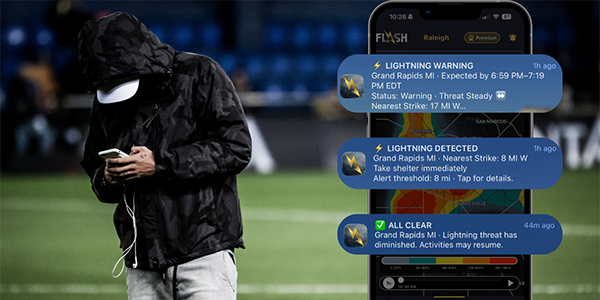
And part of what makes weather so hard to account for is that a lot of our traditional weather tools aren’t up to snuff. These tools, like radar, tend to report what is already happening – precipitation that is already falling, lightning strikes that have hit nearby and severe weather alerts after the storm has already formed. And while any knowledge is better than none, these tools often leave decision-makers reacting rather than preparing.
The result of reactive storm management? Professionals are often left analyzing radar loops and making guesses about what may happen next in an attempt to keep people safe and operations running smoothly. As David Downey wrote in an article for Flash Weather AI:
The tools hand you raw data about what already happened, and a person on your team, an athletic director, a superintendent, or a project manager ends up playing meteorologist and trying to guess what happens next... A role that wasn’t ever a part of their job description.
 So, how do you make the switch from this reactive management to proactive, prepared strategies? National Weather Service Senior Meteorologist Jason Deese built Flash Weather AI to help professionals do just that!
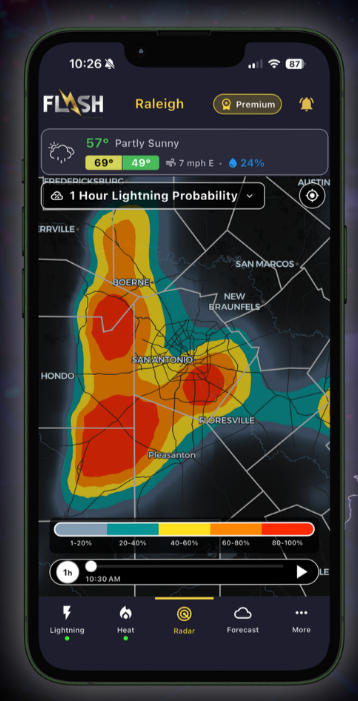
At the center of the company's platform is FlashPredict™, a self-learning atmospheric artificial intelligence engine designed to forecast conditions that lead to severe weather before storms form. Building on that technology, their FirstStrike™ program is designed to predict when and where lightning will occur before the first strike, providing organizations with up to an hour of advance warning. The Flash Weather AI team reports a 99.6% verified lightning prediction accuracy on a one-hour horizon with forecasts delivered at one-kilometer resolution and refreshed every two minutes.
The platform also addresses restart decisions through Flash All Clear, which replaces a fixed 30-minute rule with a signal that updates every two minutes based on predicted lightning activity. And last but not least, Flash AI Hail provides hail forecasts, projected hail paths and arrival times for specific locations.
Overall, Flash Weather AI’s programs give professionals the time they need to clear fields, move spectators, adjust schedules and make operational decisions in a more orderly manner as well as the information they need to reduce weather-related operational downtime and financial losses.
Make the switch from reacting to weather to predicting it with Flash Weather AI.
Original image source: Flash Weather AI
Learn more about Flash Weather AI in their Coffee Shop Directory or on flashweather.ai.
Recommended For You
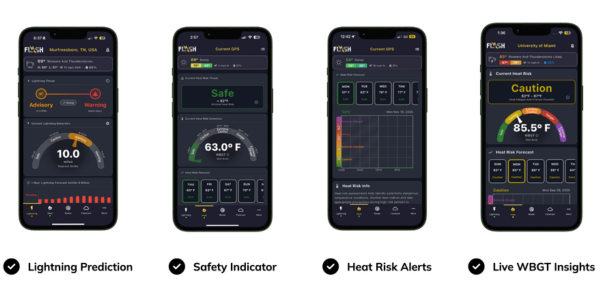
AI-driven weather insights improve jobsite safety
Read More ...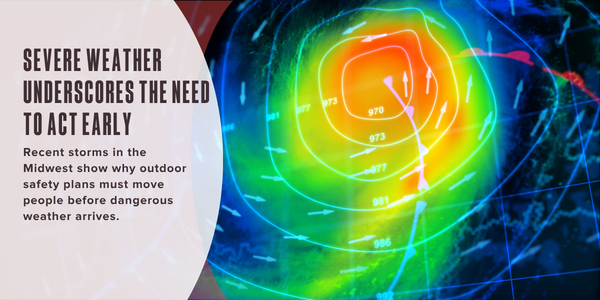
Severe weather underscores the need to act early
Read More ...
Smarter irrigation starts with better scheduling
Read More ...
UP TO THE MINUTE






Comments
Leave a Reply
Have an account? Login to leave a comment!
Sign In