



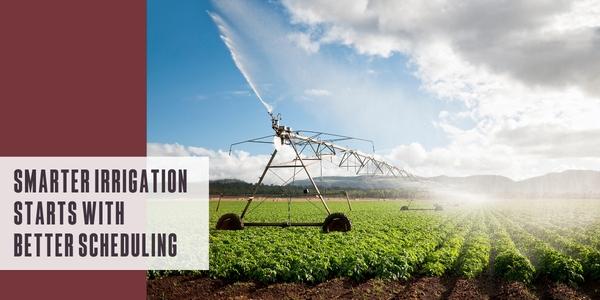
Smarter irrigation starts with better scheduling
By Jesse Sanchez.
Combining soil moisture data, weather forecasts and crop information can help growers apply water more efficiently.
Efficient irrigation depends on knowing when crops need water and how much to apply, especially during periods of rapidly changing weather. The Irrigation Association reports that Michigan State University (MSU) Extension specialists recommend moving beyond fixed schedules and using multiple sources of field data to guide each application.
“Weather can change quickly and it can be difficult to know whether recent rainfall actually replenished the root zone or if more irrigation is still needed,” said Angie Gradiz, MSU Extension agriculture water use efficiency educator.
Crop water requirements change throughout the growing season and conditions can vary between fields. Angie said combining evapotranspiration (ET) estimates, soil moisture sensors and weather information can help growers determine whether irrigation is necessary or can be delayed.
Proper sensor placement is essential for collecting reliable information. Younsuk Dong, Ph.D., an irrigation specialist in MSU’s Department of Biosystems and Agricultural Engineering, recommends installing sensors in locations that represent typical soil, crop and irrigation conditions. Field edges, low areas and locations with drainage problems should generally be avoided.
The number of sensors needed depends on field variability. A uniform field may require only one monitoring location, while fields with multiple soil types or management zones may need several. Sensors should also be installed within the crop’s active root zone and maintain good contact with the surrounding soil. Younsuk shared, “Air gaps around the sensor can lead to inaccurate readings."
Growers can further improve scheduling by recording irrigation and rainfall, evaluating soil moisture after rain, monitoring crop water use and using regional scheduling tools. Soil moisture readings should be considered alongside ET estimates, forecasts and field observations rather than treated as a single source of truth. Angie noted, “Ultimately, irrigation scheduling is one of the most cost-effective ways producers can improve water use efficiency."
Learn more about the Irrigation Association in their Coffee Shop Directory or visit www.irrigation.org/IA.
About the author

Jesse is a writer for The Coffee Shops. When he is not writing and learning about the roofing industry, he can be found powerlifting, playing saxophone or reading a good book.
Recommended For You

How extreme weather is shaping the construction industry
Read More ...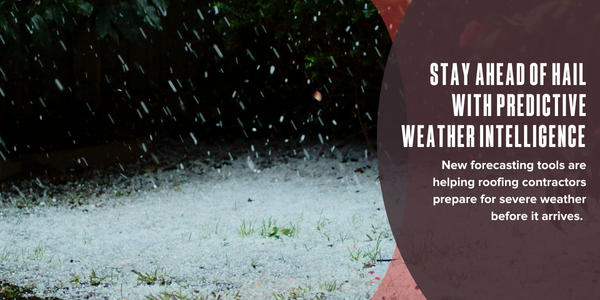
Stay ahead of hail with predictive weather intelligence
Read More ...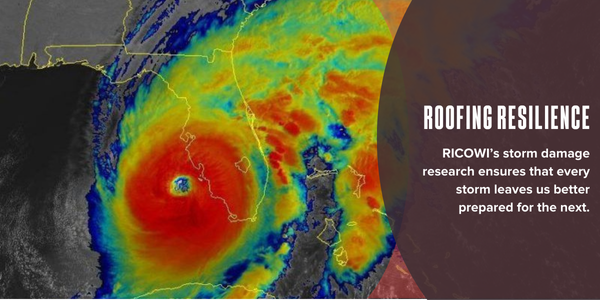
Roofing resilience to protect against nature’s unpredictable forces
Read More ...
UP TO THE MINUTE






Comments
Leave a Reply
Have an account? Login to leave a comment!
Sign In