




Choosing the right adhesive for synthetic turf
By Jesse Sanchez.
Learn how different adhesive technologies and weather considerations influence the performance and durability of synthetic turf installations.
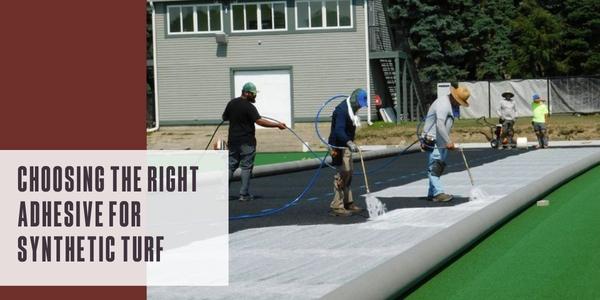
Selecting the right adhesive is one of the most important decisions in synthetic turf installation. Companies such as NORDOT Adhesives emphasize that while buyers sometimes search for a single “best” adhesive, the reality is far more complex. Adhesives are designed for specific environments and applications, meaning the product that performs well in one scenario may perform poorly in another.
Below, an industry expert explains some of the key factors contractors and buyers should understand when evaluating synthetic turf adhesives.
Q: Are there many different types of synthetic turf adhesives? If so, what are their differences?
A: It’s a very broad subject. For example, there are adhesives for use outdoors vs. indoors; adhesives for recreational surfaces like synthetic turf athletic fields and playgrounds vs. synthetic turf adhesives for aesthetic purposes like landscaping, lawns, highway median strips, roof tops, etc.
Because of these differences, buyers should evaluate adhesives based on performance rather than price alone. Higher-performing adhesives are designed to withstand athletic activity and environmental exposure, helping reduce the likelihood of repairs later.
Q: What should installers consider when selecting adhesives for outdoor athletic fields and playgrounds?
A: Weather is one of the most important considerations. Conditions change from hour to hour, day to day and across seasons. Adhesives that perform only in ideal conditions can create installation delays and costly scheduling challenges. Since time is money, unnecessary delays created by using ‘fair weather only’ adhesives can be very costly.
During installation, a reliable outdoor adhesive should also prevent turf movement caused by wind lift, edge curl, wrinkling, buoyancy from unexpected rain and expansion or contraction resulting from temperature changes.
Q: What types of adhesives are used commercially today?
A: They are hot melts, one and two-part liquid solvent-free urethanes; one-part and two-part solvent-based urethanes; two-part epoxy and one-part solvent-free silane/silicone-based adhesives.
Q: Which adhesive type is most commonly used for synthetic turf?
A: It’s one-part urethane adhesives by far, but the word “urethane” covers a wide range of formulations. Just as the word “metal” can refer to very different materials, urethane adhesives can vary widely in performance.
Because of those differences, installers are encouraged to review manufacturer literature and safety data sheets rather than relying on price or sales claims. Understanding how adhesives perform during installation and over time is key to ensuring durable, long-lasting synthetic turf systems.
Learn more about choosing the right adhesive for synthetic turf!
Learn more about NORDOT Adhesives in their Coffee Shop Directory or on nordot.com.
About the author

Jesse is a writer for The Coffee Shops. When he is not writing and learning about the roofing industry, he can be found powerlifting, playing saxophone or reading a good book.
Recommended For You

Marketing Insights for Exterior Pros
Read More ...
Garrett Bastardi - Turf Intelligence in Action
Read More ...
2026 GCSAA Conference and Trade Show
Read More ...
UP TO THE MINUTE



Comments
Leave a Reply
Have an account? Login to leave a comment!
Sign In