





Planting for beauty and bounty
By Emma Peterson.
Level up your landscaping by adding food-producing plants to an ornamental garden.
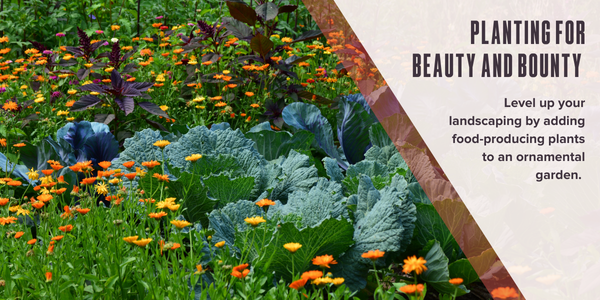
You’ve probably heard of edible arrangements, but have you heard of edible landscaping? This is the practice of incorporating edible plants into a landscape following design principles. It’s perfect for homeowners who either don’t have the space for the traditional vegetable garden or are worried about how a raised bed may affect their home’s curb appeal.
Further, edible landscaping often offers a lower-maintenance way for homeowners to grow some of their own food as it places a larger emphasis on perennial plants than the seasonal crops of a traditional vegetable garden. There are a variety of benefits to edible landscaping, including getting access to more nutritious options, creating more sustainable food systems and encouraging interaction with the food web.
In general, there a few things that you need to keep in mind when designing an edible landscape for a client.
Avoid chemicals
Oftentimes pesticides and herbicides that are fine to use for ornamental plants are not safe for edible plants. For health and safety, it’s best to avoid using chemicals on plants or produce fruit that is going to be eaten. This does mean that your client will probably share some of their harvest with local insects and wildlife, but it is worth it to have pesticide-free food.
Choose native plants
Invasive plants are not only bad for the environment, but they can be hard to manage as they often spread uncontrollably. Using native plants that are suited to your U.S. Department of Agriculture hardiness zone will make sure they are well adapted to the level of sunlight, moisture and drainage of the landscape they are planted in, not only keeping the environment healthy but also keeping maintenance needs low.
Think about placement
Avoid creating edible landscaping in areas where you might get run off pollution that would make the produced food less safe for consumption. This includes things like roads and sidewalks.
Respect shared spaces
If you are working on a home that is in an HOA or is close to city areas, make sure that you are adhering to their guidelines. This means making sure your layout fits with HOA requirements and that you do not block off city access to things like water meters.
Create a care schedule
Work with your client to make sure they are prepared to call you or care for the plants themselves on a schedule. You will want to make sure that things like water schedules account for natural rainfall and each plant's individual water needs.
Think about the aesthetics
The big thing that separates edible landscaping from gardening is the integration of edible plants with ornamental ones. Think about landscaping design principles when creating these spaces and combine textures, heights and shapes to create visual interest.
If you’re interested in learning more about creating edible landscapes, make sure to check out this article on the topic from the Newman Times Herald.
Stay up to date with the latest industry news when you sign up for the Coffee Shop eNews.
About the author

Emma is the senior content developer at The Coffee Shops and AskARoofer™. When she's not working or overthinking everything a little bit, she enjoys watching movies with friends, attending concerts and trying to cook new recipes.
Recommended For You
Jameson Allen - Safety Beyond the Standard: Rethinking Weather Risk
Read More ...
Cultivate 2027
Read More ...
The TurfMutt Foundation’s Mutt Madness finds forever homes for 13 shelter dogs
Read More ...
UP TO THE MINUTE





Comments
Leave a Reply
Have an account? Login to leave a comment!
Sign In