




Leveling up irrigation with precise automation
By The Coffee Shops™.
Modern automated block irrigation is playing a key role in improving water management, labor efficiency and crop performance.
For specialty crop growers, irrigation decisions are a big deal. Take vineyards as an example. Irrigation must be perfectly balanced as overwatering can dilute Brix (sugar) levels and lead to improperly grown grapes for wine, but insufficient water can likewise damage growth stages and lead to reduced grape production overall! It’s a lot to balance on its own, not to mention accounting for labor challenges, water shortages, rising utility costs and weather inconsistencies.
Luckily, modern technology has developed new and innovative tools that can help crop growers better manage their irrigation systems. In an article for the Irrigation Association, journalist Mike Zawacki dove into one such solution – modern automated block irrigation.
What is modern automated block irrigation?
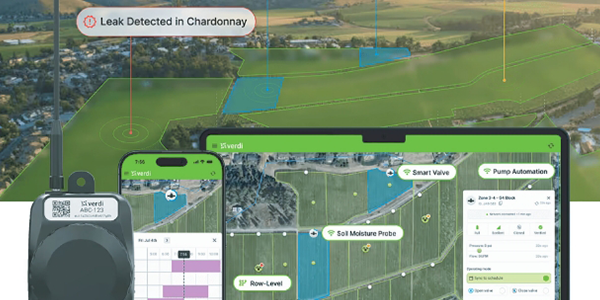
Traditional block irrigation divided fields into zones that could be irrigated independently. However, these systems often relied on manual oversight and provided little feedback to growers. Today’s block irrigation technology combines automation, sensing and real-time data collection to create a more responsive approach to water management.
Using tools such as satellite imagery, drones, remote sensors, GPS mapping and cloud-connected controls, growers can apply water according to the specific needs of individual management zones. Rather than delivering the same amount of water across an entire field, irrigation can be tailored to differences in soil conditions, moisture availability and crop demand.
What are the benefits of this?
Industry experts say this targeted approach improves resource efficiency while helping maintain crop health. By matching irrigation schedules to field variability, growers can optimize water use and support more consistent production outcomes.
Automation also addresses one of the biggest challenges facing specialty agriculture: labor availability. Automated valves and scheduling systems can manage irrigation cycles across dozens or even hundreds of blocks without requiring workers to continuously turn systems on and off. This allows employees to focus on higher-value responsibilities while reducing time spent on routine irrigation tasks.
In addition, automated irrigation supports practices such as pulse irrigation, which applies water in shorter cycles and may improve crop quality and yield while using the same or less water.
Learn more about the Irrigation Association in their Coffee Shop Directory or visit www.irrigation.org/IA.
Recommended For You

Building a more engaged workforce starts with better conversations
Read More ...
AI will not fix a broken process
Read More ...
The blueprints to success
Read More ...
UP TO THE MINUTE






Comments
Leave a Reply
Have an account? Login to leave a comment!
Sign In