





Designing public spaces for the people
By Dani Sheehan.
Learn how community-driven design is reshaping our shared outdoors across the country.
Public spaces are so much more than parks and plazas for people to gather – they are mirrors of our societal values, stories and aspirations. As cities grow and evolve, the spaces where we gather have an obligation to change and adapt as well. From small towns like Rogers, Arkansas, to larger metropolises like Milwaukee, Wisconsin, and Baltimore, Maryland, a movement is taking shape that’s placing community engagement, cultural inclusion and sustainability at the forefront of landscape design.
Toward influence and ownership
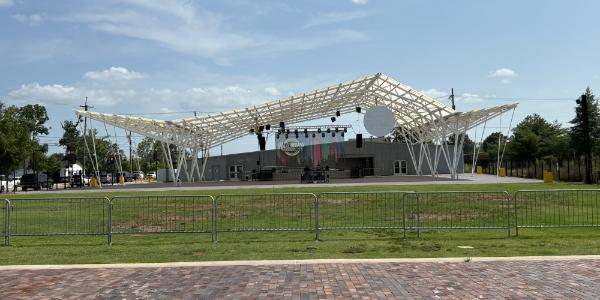
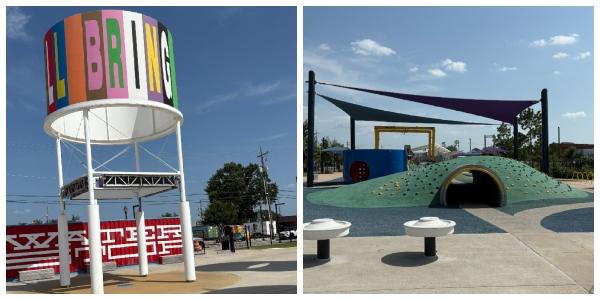
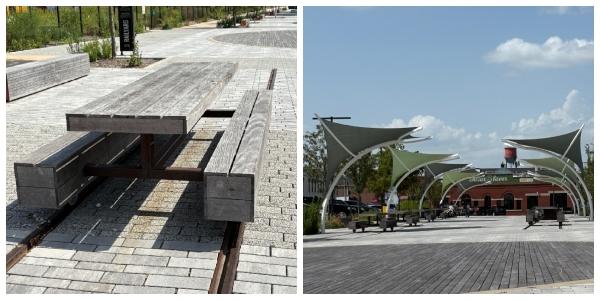
In Rogers, Arkansas, the Railyard Park project is a compelling case study of what happens when designers listen before they sit down at the drawing table. Founded in the late 1800s as a water stop along the Arkansas and Missouri Railroad, Rogers has seen steady transformation in recent decades. Now home to over 75,000 people, it serves as a bedroom community for Walmart headquarters employees and has grown more diverse, with a large community of Marshallese and roughly a third of the population identifying as Hispanic. Instead of arriving with plans in hand, Ross Barney Architects began their work by sitting at the local farmers’ market, asking residents what they wanted from a new downtown park. The responses – calls for a space to gather, hear live music and bring the kids – shaped every aspect of the design, from the music stage and flexible plaza to the play space featuring relics of the town’s railroading history.
This grassroots participation from the community is more than just access to this new space. As emphasized in the Metropolis article “The Past, Present and Future of Public Outdoor Spaces,” true equity in public spaces comes from the ability to shape them, by influencing the present and redressing past exclusions. Whether it’s the Mellon Foundation’s Monuments Project reimaging commemoration or parks programs inviting new forms of use, today’s best public spaces ask us who is being included, and who has been left out.
Culture, climate and connection
Community-led solutions are also proving effective in addressing larger urban challenges. In Milwaukee, for example, the parks department revived underused green spaces by embracing its cultural heritage: beer gardens. By leaning into the city’s German roots, they not only brought people back it public parks, but reframed long-held assumptions about alcohol in public spaces through thoughtful design and programming. These parks have become true third places, alive with activity and local pride.
In Baltimore, design is being deployed to confront environmental injustice. A city long burdened by pollution and climate vulnerability, Baltimore is now using its public spaces as laboratories for climate adaptation. From mitigating heat-island effects to redesigning stormwater infrastructure, other industrial cities across the country are demonstrating how landscape architects and urban designers can directly impact public health and climate resilience, especially in underserved communities.
A call to professionals: Design with intention
The work of landscape professionals and outdoor designers has never been more critical or powerful. Public outdoor space is where art, history, health and climate converge. It’s where monuments can correct or perpetuate historical narratives, where trees can cool overheated neighborhoods and where hardscapes can either connect communities or divide them.
The future of our parks, plazas and civic spaces depends on designs that:
- Engage the public in a meaningful way
- Reflect the diversity of stories, cultures and experiences within a community
- Promote sustainability and resilience in the face of climate change
Railyard Park’s success in downtown Rogers is proof that honoring a town’s past and connecting with its present population can catalyze its future. Its train-inspired playground, music stage and flexible hardscapes have not only brought new life to the town but attracted new business, art and identity. Even after a devastating tornado destroyed parts of the city in May 2024, the small-town community continues to renovate its neighborhoods with replanting efforts, trail lighting and other projects to enhance the area. With live music shows every Friday and Saturday from June through October, you can get the big city feel while maintaining small town connections.
Cities across the U.S. are finding creative ways to turn underfunded parks into cultural and economic assets – proving that outdoor design is not a luxury; it’s a necessity.
Photo credit: Dani Sheehan
Stay up to date with the latest industry news when you sign up for the Coffee Shop eNews.
About the author
Dani is a writer for The Coffee Shops. When she's not writing or researching, she's exploring new hiking trails or teaching yoga classes.
Recommended For You
Walking-working surfaces: The everyday hazards that put crews at risk
Read More ...
The Coffee Shops™ welcome H&C® Decorative Concrete Products
Read More ...
Rescuing an ugly pool deck
Read More ...
UP TO THE MINUTE




Comments
Leave a Reply
Have an account? Login to leave a comment!
Sign In